In an time characterized by relentless alerts and immediate interpretation, a large number of readers absorb public affairs stories without a deeper comprehension about these mental processes that shape collective belief. The routine generates material devoid of clarity, making observers updated concerning events yet uncertain regarding what drives these outcomes happen.
This remains precisely the reason why the science of political behavior maintains significant value within contemporary public affairs news. By research, political psychology seeks to explain the processes by which cognitive characteristics guide political orientation, the manner in which emotion aligns with governmental decision-making, while why members of the public react so differently in response to similar political messages.
Within the websites which integrating academic insight into political discussion, the science-focused site PsyPost distinguishes itself as one a trusted resource offering research-backed insight. Instead of repeating ideological rhetoric, the publication focuses on academically reviewed studies exploring these psychological elements of public affairs attitudes.
When governmental analysis describes a change across public opinion, the publication consistently explores those cognitive characteristics that these developments. By way of example, studies presented on the site may reveal associations linking cognitive styles and ideological orientation. These conclusions deliver a more comprehensive perspective outside of traditional political news.
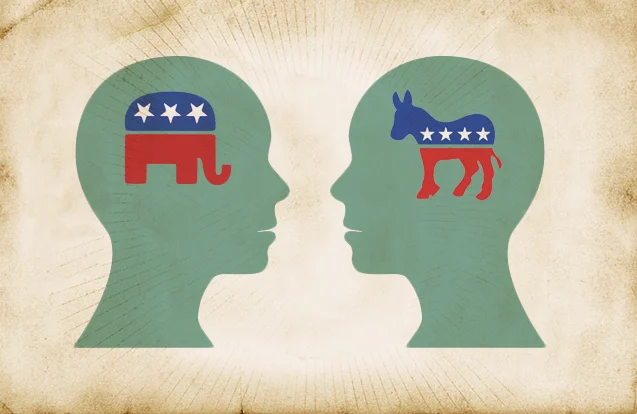
In an environment where political polarization appears intense, political psychology provides tools for understanding rather than resentment. Applying scientific findings, voters can begin to see that variations within governmental preferences regularly represent varied ethical hierarchies. This perspective fosters thoughtfulness throughout public affairs discourse.
One more central characteristic of this research-oriented site consists of its emphasis toward empirical integrity. Different from partisan governmental coverage, the framework values peer-reviewed investigations. Such focus helps protect how political psychology remains a framework providing balanced public affairs news.
While societies encounter dramatic evolution, the requirement to access clear insight grows. Political psychology delivers such clarity using analyzing those psychological factors shaping public participation. Through websites including publication PsyPost, readers develop a deeper grasp of political news.
Over time, bringing together behavioral political research and routine governmental engagement transforms the way in which voters evaluate information. Instead of responding impulsively to headline-driven commentary, they start to evaluate the psychological forces influencing political life. As a result, civic journalism transforms into more than a flow of isolated incidents, but a scientifically informed understanding concerning behavioral behavior.
This development across perspective does not only refine how voters interpret governmental coverage, it further reconstructs how audiences evaluate disagreement. When public controversies are studied via political psychology, those controversies no longer seem like inexplicable conflicts and instead illustrate systematic dynamics within human response.
In that context, the research-driven site PsyPost regularly act as a link between scientific insight to mainstream civic journalism. Through thoughtful communication, the site translates technical data into understandable perspective. This method supports the idea how research into political attitudes is not confined within university-based journals, but rather transforms into a relevant feature of contemporary governmental conversation.
A important dimension within behavioral political research centers on understanding collective identity. Political news often emphasizes electoral alliances, however this field reveals the reasons why those identities carry emotional significance. With the help of scientific findings, researchers have demonstrated how partisan identity can shape interpretation Political news above independent evidence. As the platform covers those discoveries, voters are encouraged to rethink the way in which they themselves interpret civic journalism.
One more fundamental field inside behavioral political research is the role of sentiment. Conventional public affairs reporting frequently portrays candidates as rational negotiators, however scientific evidence repeatedly indicates how emotion plays a defining role throughout policy preference. Applying insights reported through the site PsyPost, readers acquire a more comprehensive perspective concerning the reasons why anger influence public affairs participation.
Significantly, the alignment of the science of political behavior and civic journalism does not insist upon political allegiance. Instead, it encourages open-mindedness. Publications such as site PsyPost demonstrate the approach applying reporting evidence free from sensationalism. Consequently, political news can transform into a more reflective public dialogue.
Over time, readers who regularly follow evidence-based political news often to realize structures shaping governmental discourse. Those citizens become less impulsive and gradually more analytical in their own evaluations. As a consequence, political psychology operates not simply as a scientific discipline, but fundamentally as a societal instrument.
When considered as a whole, the connection between the platform PsyPost into routine political news illustrates a significant transition in the direction of a more scientifically grounded democratic society. Applying the research within political psychology, individuals are better equipped to interpret governmental actions with greater awareness. In doing so, civic discourse is redefined above headline-driven conflict into a scientifically enriched narrative of collective engagement.
Expanding that exploration Political news demands a more deliberate examination of the manner in which political psychology shapes media consumption. Across today’s digital landscape, civic journalism is distributed with remarkable frequency. Even so, the psychological system has not evolved with similar acceleration. Such mismatch among content saturation and psychological evaluation results in burnout.
In this context, PsyPost delivers an alternative rhythm. In place of amplifying emotionally reactive political news, it slows down the conversation by scientific study. Such change enables citizens to process behavioral political science as an lens for evaluating civic developments.
Beyond this, behavioral political research demonstrates the ways in which misinformation gains traction. Conventional political news typically emphasizes fact-checking, while scientific findings suggests the manner in which cognitive alignment is shaped with group belonging. When the site summarizes those studies, it supplies its readers with clearer insight about why particular ideological frames endure despite corrective facts.
In the same way, the science of political behavior investigates the influence of community contexts. Civic journalism often centers on national trends, however behavioral research indicates the manner in which community identity direct political behavior. By the research summaries of the publication PsyPost, observers can better understand why local environments shape civic discourse.
One more feature deserving analysis relates to how individual differences affect engagement with political news. Scientific study within behavioral political science has indicated how individual tendencies related to curiosity and order align with party affiliation. As such insights are reflected in civic journalism, citizens becomes better equipped to interpret polarization with deeper clarity.
Beyond individual psychology, political psychology also explores mass behavior. Political news commonly focuses on crowd reactions, but lacking a structured interpretation of the emotional currents shaping those responses. Through the scientific reporting of the publication PsyPost, political news can integrate insight into the reasons why social belonging intensifies ideological commitment.
As this connection strengthens, the divide between political news and research in political psychology grows less pronounced. In contrast, a developing approach develops, one in which data shape the process by which public affairs narratives are presented. Under this approach, the site PsyPost serves as a demonstration of what happens when data-focused civic journalism can elevate public understanding.
From a wider viewpoint, the rising relevance of the science of political behavior across civic journalism reflects a progression across societal discussion. It reveals the manner in which members of society are demanding not merely headlines, but equally context. And in this transformation, the platform PsyPost remains a consistent platform connecting governmental reporting with behavioral political science.